<?xml version="1.0" encoding="utf-8"?><feed xmlns="http://www.w3.org/2005/Atom" ><generator uri="https://jekyllrb.com/" version="3.10.0">Jekyll</generator><link href="https://nm-sra.github.io/feed.xml" rel="self" type="application/atom+xml" /><link href="https://nm-sra.github.io/" rel="alternate" type="text/html" /><updated>2026-04-02T16:54:41+00:00</updated><id>https://nm-sra.github.io/feed.xml</id><title type="html">NM SRA</title><subtitle>New Mexico Chapter of the Socialist Rifle Association</subtitle><entry><title type="html">IFAK</title><link href="https://nm-sra.github.io/medical/safety/2026/04/01/ifak.jekyll.html" rel="alternate" type="text/html" title="IFAK" /><published>2026-04-01T16:00:00+00:00</published><updated>2026-04-01T16:00:00+00:00</updated><id>https://nm-sra.github.io/medical/safety/2026/04/01/ifak.jekyll</id><content type="html" xml:base="https://nm-sra.github.io/medical/safety/2026/04/01/ifak.jekyll.html"><![CDATA[<h1 id="ifaks-what-why-how">IFAKs: What, Why, How</h1>

<p>Individual First Aid Kits (IFAKs) are a critically important component of equipment for any person engaged in activities such as community support/mutual aid, preparedness, protests, and firearms training and use. In this post we hope to outline the key use cases or IFAKs, “must have” items to include (as well as some other additions that can be included or withheld to suit the individual users), and some ways to procure supplies to create your own IFAK at a more reasonable price point. Lastly, we will touch on some opportunities for community members to familiarize themselves with the contents of IFAKs and their use.</p>

<h2 id="what-is-an-ifak-and-what-is-its-primary-purpose">What is an IFAK and what is its primary purpose?</h2>
<p>The IFAK hails from the military where the concept was developed to help stop preventable deaths from hemorrhage. Incidentally, massive bleeding is the single greatest potentially preventable cause of death from trauma, and in many ways these kits focus primarily on stopping bleeding. In the case of the military’s development of the concept, it was determined during the Iraq War circa 2003 that substantial loss of life was occurring as a result of inadequate immediate response to extremity bleeding.</p>

<p>One of the primary goals is for everyone in dangerous scenarios to have rapid, easy access to critical tools for stabilizing themselves or others in the event of serious injury and bleeding, before they can ultimately be cared for by EMS, trauma facilities, etc. The IFAK is therefore very focused in its concept and contents, it is <em>not</em> a “boo boo kit” featuring Band Aids and over the counter medication, nor is it a cumbersome all inclusive medical kit. IFAKs are ubiquitous in terms of their being a part of standard gear in the military and (perhaps to a lesser extent) law enforcement, however they are becoming much more common for civilians to use and maintain (particularly when participating in activities that might increase the general risk level for more serious trauma e.g. firearms use and range training—but also scenarios like protests, where recent disturbing events and infringement on First Amendment rights have brought home the substantially increased risks).</p>

<h2 id="what-makes-up-an-ifak">What makes up an IFAK?</h2>
<p>There are some key components that can be considered essentials or must haves in every IFAK.</p>

<h2 id="critical-components">Critical components:</h2>
<ul>
  <li>A pouch or method for containing the loose components of the kit—ideally in a way that is rapidly deployable and somewhat organized. The worst time to be looking for a critical piece of the kit is when someone has been seriously injured and every second counts.
    <ul>
      <li>There are many options at a wide range of price points for obtaining purpose built IFAK pouches or bags. Many of these will include a way to affix them to things like belts, MOLLE webbing on gear such as plate carriers or backpacks, or in places like vehicles.</li>
      <li>Additionally, many will feature a way to organize the contents using webbing, elastic bands, Velcro, zippers, etc. This also will often include ways to affix critical items (like tourniquets) to the exterior where they are immediately accessible.</li>
      <li>Ultimately, even putting the contents in a Ziplock or vacuum sealed bag that is ready to go is a reasonable and cost effective way to prepare the contents and make them portable.</li>
    </ul>
  </li>
  <li>Gloves
    <ul>
      <li>At least one pair of quality nitrile gloves sized appropriately for the user and accessible immediately upon deployment of the IFAK.</li>
    </ul>
  </li>
  <li>Trauma shears
    <ul>
      <li>These are non pointed, heavy duty scissors, designed to cut through clothing to expose bleeding wounds and trauma.</li>
      <li>These come at a wide variety of price points as well.</li>
    </ul>
  </li>
  <li>Tourniquets
    <ul>
      <li>A tourniquet is a device applied to a limb to control life threatening bleeding. It applies strong pressure to the extremity to compress blood vessels and stem hemorrhage.</li>
      <li>There are several different primary types of tourniquets:
        <ul>
          <li>“Windlass” style featuring an attached rod or windlass that is twisted to increase compression of the strap on the extremity.</li>
          <li>Ratcheting style where a ratchet device is utilized to tighten the tourniquet.</li>
          <li>Rubber / ”Stretch, Wrap and Tuck”/ SWAT tourniquets a stretchable rubber band that is wrapped tightly and secured to itself in order to apply pressure.</li>
        </ul>
      </li>
      <li>It is critical that you select a tourniquet style that you are <em>familiar and proficient with</em>. At a minimum, this means opening the packaging, reviewing any included instructions, and practicing applying the tourniquet.</li>
      <li>The windlass style Combat Application Tourniquet (CAT) is the most widely used in military and law enforcement and has a proven record in combat and first responder applications.</li>
      <li>Having the tourniquet “staged” or ready to rapidly deploy (removed from packaging and set up for quick application, including one handed deployment) is a must.</li>
    </ul>
  </li>
  <li>Permanent marker/Sharpie:
    <ul>
      <li>When applying a tourniquet, it is important to notate and mark the time of application for EMS/trauma personnel.</li>
      <li>These can be attached to the tourniquet or tourniquet holder, in many cases. They also are available with caps that have key rings and can be attached to the outside of an IFAK/pouch.</li>
    </ul>
  </li>
  <li>Gauze
    <ul>
      <li>IFAKs should contain at least one type of gauze product for packing bleeding wounds and applying pressure.</li>
      <li>This comes in several formats with very different price points:
        <ul>
          <li>Compressed or rolled gauze—plain, sterile gauze that typically comes in longer lengths and is used to pack bleeding wounds in order to apply pressure and stop bleeding. Compressed gauze comes in a very tight vacuum sealed package and conserves space.</li>
          <li>Hemostatic gauze—gauze which has additional properties/additives that aid in hemostasis, or formation of clots. This gauze is significantly more expensive and has a more limited shelf life to consider.</li>
          <li>An important note: survival rates for effectively applied standard gauze products vs the much more expensive hemostatic gauze products are actually fairly similar—although in severe bleeding, particularly arterial, hemostatic gauze does have an edge and has been shown to help increase survival rates. The authors’ primary takeaway is to include and use the gauze you can afford and keep on hand.</li>
        </ul>
      </li>
    </ul>
  </li>
  <li>Emergency Bandage
    <ul>
      <li>A stretchable/elastic wrap with an affixed gauze/absorbent pad and a method for applying additional pressure to keep packed gauze in place.</li>
      <li>These often come vacuum sealed for space savings in the IFAK.</li>
    </ul>
  </li>
  <li>A light source
    <ul>
      <li>Given the variability in terms of available light in an emergency situation, having a light source such as a small headlamp or chem light stick is an important feature.</li>
    </ul>
  </li>
</ul>

<h3 id="additional-or-specific-use-case-components">Additional or specific use case components:</h3>
<p><em>Please note that some of the listed items should be used only if trained—this will be notated with the items.</em></p>
<ul>
  <li>Chest Seal
    <ul>
      <li>Used for penetrative chest trauma (e.g. gunshot wounds) where the wound is covered with an occlusive, adhesive bandage.</li>
      <li>These come in several different styles (vented/non vented) and often in “two packs” for situations where both an entry and exit wound need to be covered.</li>
      <li>These may come with gauze for wiping away blood or other substances on the surface of the skin that would inhibit adhesion of the dressing.</li>
      <li>Keeping a disposable razor to shave the immediate area around the chest wound is also suggested.</li>
    </ul>
  </li>
  <li>Airways
    <ul>
      <li>Nasopharyngeal airways or NPAs are devices that are inserted in a nostril and fed back toward the trachea to help bypass airways that are obstructed, e.g. by the tongue in many cases.</li>
      <li>These come in different sizes, and in some cases come pre lubricated to aid in insertion.</li>
      <li>This is an item that would best be included by individuals who are trained in their use – particularly as there are serious contraindications to use that can cause much more severe complications, particularly with severe facial/nasal trauma or suspected skull fractures.</li>
      <li>There are also oropharyngeal airways (OPA), which again help prevent the victim’s tongue from obstruction their airway – these, too, require training for insertion and should not be inserted by untrained individuals or used with victims who are conscious/semi conscious, as use can trigger gagging/vomiting that can lead to aspiration (inhalation of vomitus into the lungs).</li>
    </ul>
  </li>
  <li>Needle decompression kit
    <ul>
      <li>A needle and catheter device that is designed to relieve pressure on a lung from what is called a tension pneumothorax, or air that has entered the space around the lungs and is preventing expansion with respiration.</li>
      <li><em>This is an item that would best be included by individuals who are trained in their use, particularly as there are serious complications that can occur with use, including perforation of the heart if the device is placed in the wrong location.</em></li>
    </ul>
  </li>
</ul>

<h2 id="how-do-i-obtain-or-assemble-my-own-ifak">How do I obtain or assemble my own IFAK?</h2>

<p>Here are some options for preparing your own IFAK, with a focus on inclusivity and acknowledgement of the significant cost of some of the components.</p>

<p>Prebuilt kits can be obtained from places like North American Rescue (NAR) and Rescue Essentials. These will often range in price, and at the time of this post, may cost anywhere from $120 to $300 or more. The lower end of this range will include non hemostatic gauze and more basic supplies, though typically with all or most of the critical components noted above. Ensure you are reviewing the contents (including review of contents when moving through each tier of a pre assembled IFAK, as they will often have “levels” Basic and Advanced, for example). If affordable, this may be a good option for quick access to an IFAK.</p>

<p>Additionally, you can obtain the individual components and assemble these kits yourself, often for at least modest savings.</p>

<p>A few options for procuring components:</p>
<ul>
  <li>Guerilla Tactical (www.guerilla-tactical.com)
    <ul>
      <li>One of only a few options that are not expressly pro law enforcement/military and may align somewhat more closely with the consumer’s principles. Not the cheapest option.</li>
      <li>You can obtain individual components including tourniquets, pouches, and certain types of gauze at their website.</li>
    </ul>
  </li>
  <li>Med-Tac International (www.tactical-medicine.com)
    <ul>
      <li>At the time of the article, this group (reportedly physician owned) had some of the lowest prices for things like CAT tourniquets and hemostatic gauze.</li>
    </ul>
  </li>
  <li>Amazon
    <ul>
      <li>While many of us have serious reservations about supporting the company, they are inarguably one of the cheapest sources for individual components.</li>
      <li>A very important caveat: it is increasingly more common to see very convincing “knock off” products sold on Amazon, and when we are talking about life saving items such as tourniquets, the authors’ stance is that this is not worth the risk hands on comparison between off brand vs. the genuine CAT tourniquet, for example, reveals that the polymers used for the “plate” and windlass vary significantly in terms of quality and structure.</li>
      <li><em>A good option for researching/reviewing what is available in order to find the products/brands and buy from their websites directly.</em></li>
    </ul>
  </li>
  <li>Brick and mortar stores
    <ul>
      <li>Drugstores and grocery stores will often have at least some of the components available—e.g. nitrile gloves, some gauze products.</li>
      <li>Many sporting goods stores and outfits like REI may have hemostatic gauze, tourniquets and other more specialized items.</li>
    </ul>
  </li>
</ul>

<h2 id="how-do-i-learn-more-about-ifaks-and-their-use">How do I learn more about IFAKs and their use?</h2>

<p>The authors strongly recommend that every person carrying an IFAK seek out and attend some sort of educational opportunity. Stop the Bleed, a registered program with the American College of Surgeons and the U.S. Department of Defense, is an affordable, well known and intentionally developed course to familiarize attendees with bleeding control and use of the principal components of an IFAK/Stop the Bleed kit.</p>

<p>You can visit the Stop the Bleed website (<a href="https://www.stopthebleed.org">https://www.stopthebleed.org</a> - “Get Trained”) to seek out opportunities and search for locations, dates, etc.</p>

<p>Unfortunately, options in the New Mexico region have been quite limited. While historically there have been some more “informal” trainings held historically through community aid organizations, opportunities for this style of training appear to be very few and far between at the time of this post. There are other, similar courses available via other groups like the Red Cross (e.g. another joint program with Stop the Bleed called First Aid for Severe Trauma, or FAST) that may be worth reviewing for availability. The authors recommend looking for experienced educators, ideally with hands on experience/credentials (e.g. EMT/paramedics, nurses, physicians/advanced practice clinicians, Wilderness First Aid certified individuals).</p>

<p>Lastly, the Stop the Bleed course does have video only training that reviews the didactic components of the course. This is free and accessible to anyone <a href="https://www.stopthebleed.org/get-trained/online-course/">here</a> . It is strongly recommended to follow up on this video training and pursue hands on opportunities to review important points and practice with wound packing, pressure, bandages, and tourniquets.</p>

<p>Several members of the New Mexico Socialist Rifle Association (NMSRA) with healthcare backgrounds recognized a need for more options in New Mexico and have attended an out of state training to become certified, and we hope to offer trainings to our community members in the future. Stay tuned.</p>]]></content><author><name></name></author><category term="medical" /><category term="safety" /><summary type="html"><![CDATA[IFAKs: What, Why, How]]></summary></entry><entry><title type="html">Firearms 101 Class</title><link href="https://nm-sra.github.io/babbnm/teaching/instruction/2026/04/01/firearms-101-class.jekyll.html" rel="alternate" type="text/html" title="Firearms 101 Class" /><published>2026-04-01T13:00:00+00:00</published><updated>2026-04-01T13:00:00+00:00</updated><id>https://nm-sra.github.io/babbnm/teaching/instruction/2026/04/01/firearms-101-class.jekyll</id><content type="html" xml:base="https://nm-sra.github.io/babbnm/teaching/instruction/2026/04/01/firearms-101-class.jekyll.html"><![CDATA[<h1 id="firearms-101-an-inter-org-day-at-the-range">Firearms 101: An Inter-Org Day at the Range</h1>

<p>There’s a saying around the SRA: “you go far enough left and you get your guns back.” That was certainly the case at last Sunday’s Fire Arms 101 Class, where members of the NMSRA and the <a href="https://www.instagram.com/burquebrownberets/">Burque Autonomous Brown Berets of New Mexico</a> got together for a day of guns in the sun. Training began promptly at 9 AM when the SRA Range Safety Instructor shared a helpful acronym that will stick in any leftist’s head: ACAB.</p>

<ul>
  <li><strong>A</strong>lways treat all firearms as if they are loaded.</li>
  <li><strong>C</strong>ontrol your muzzle at all times.</li>
  <li><strong>A</strong>lways keep your finger outside of the trigger guard until ready to fire.</li>
  <li><strong>B</strong>e aware of your target and what’s behind it.</li>
</ul>

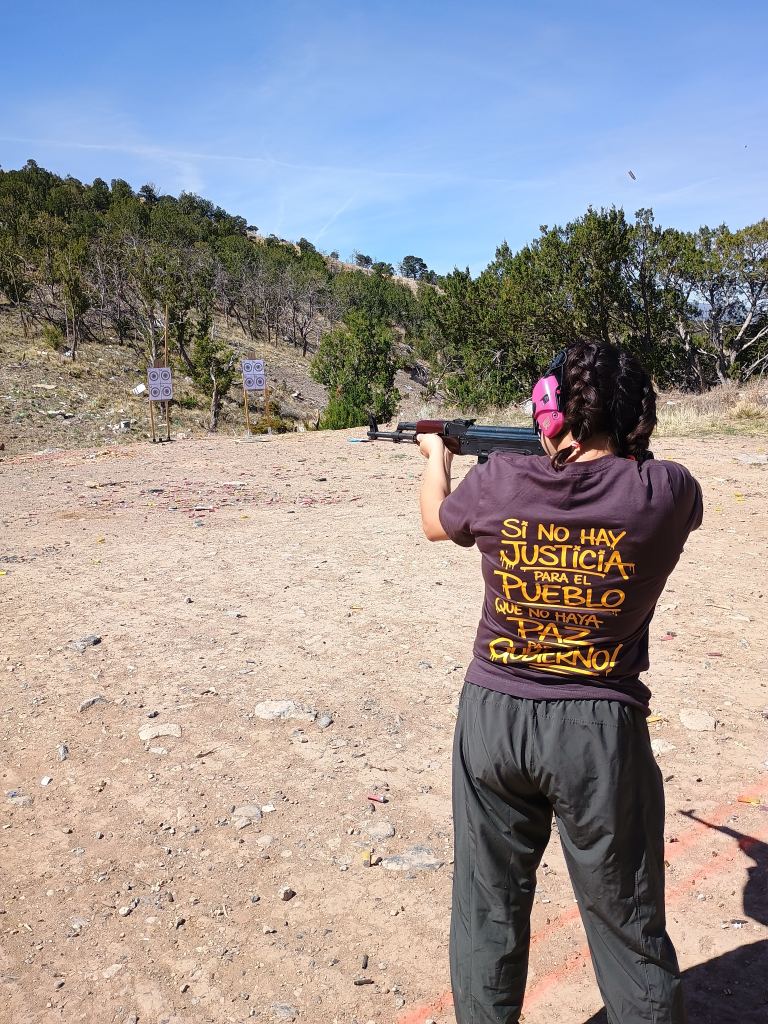
<p>Throughout the morning, groups alternated between three stations. At the handgun station, BABBNM and SRA members alike practiced target shooting with 22LR and center fire handguns; while attendees at the rifle station practiced with Bolt Action and Semi Auto 22s and pistol caliber carbines, working their way up to ARs and AKs.  SRA instructors worked closely with the shooters, making sure all participants felt comfortable and confident. By demonstrating proper firearm handling and shooting techniques, instructors aimed to provide a safe range experience for new and seasoned shooters alike.</p>

<p><img src="/assets/pictures/firearm_101/1.jpg" alt="BABBNM rifle" width="50%" style="display:block; margin:auto;" /></p>

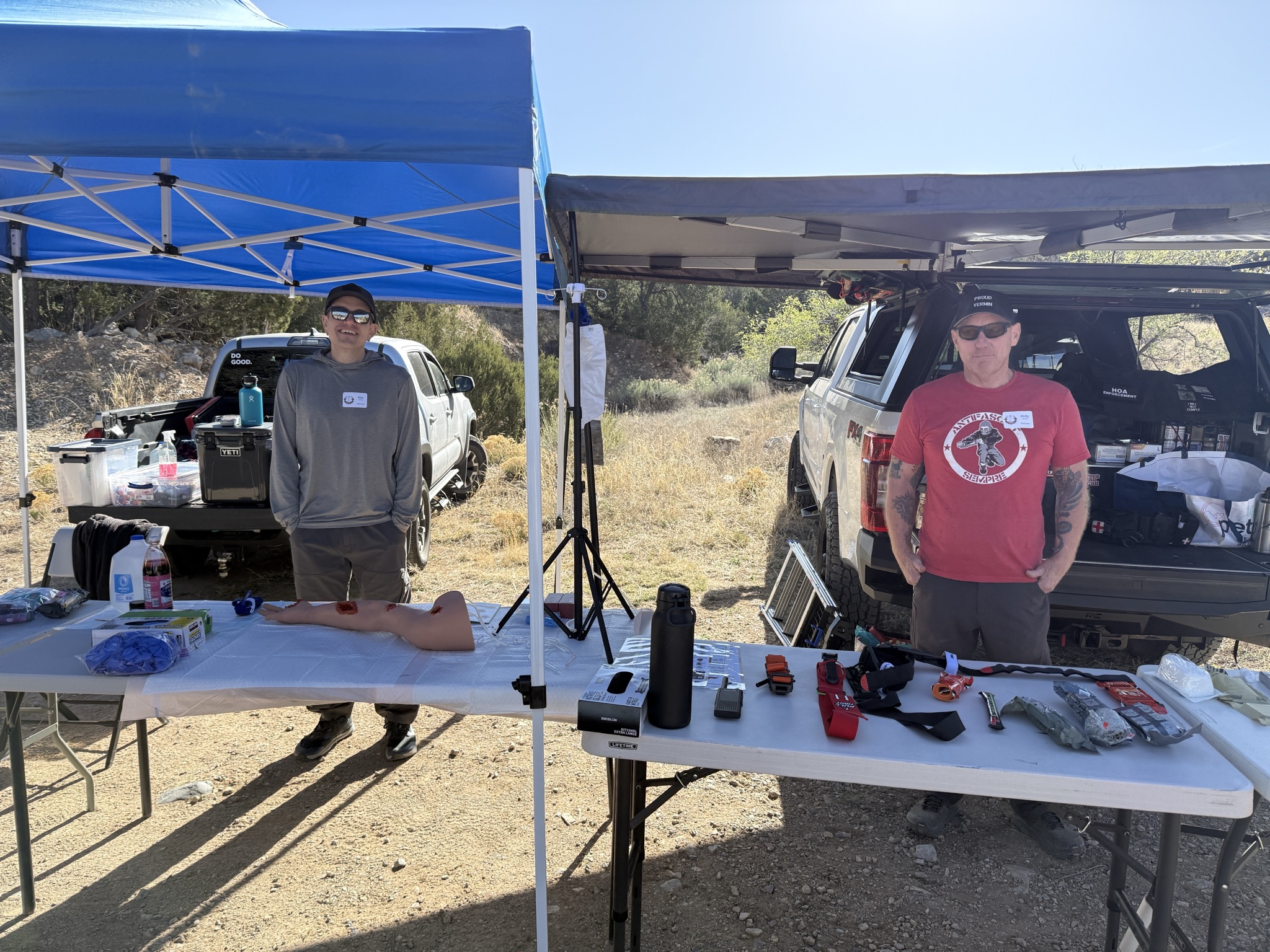
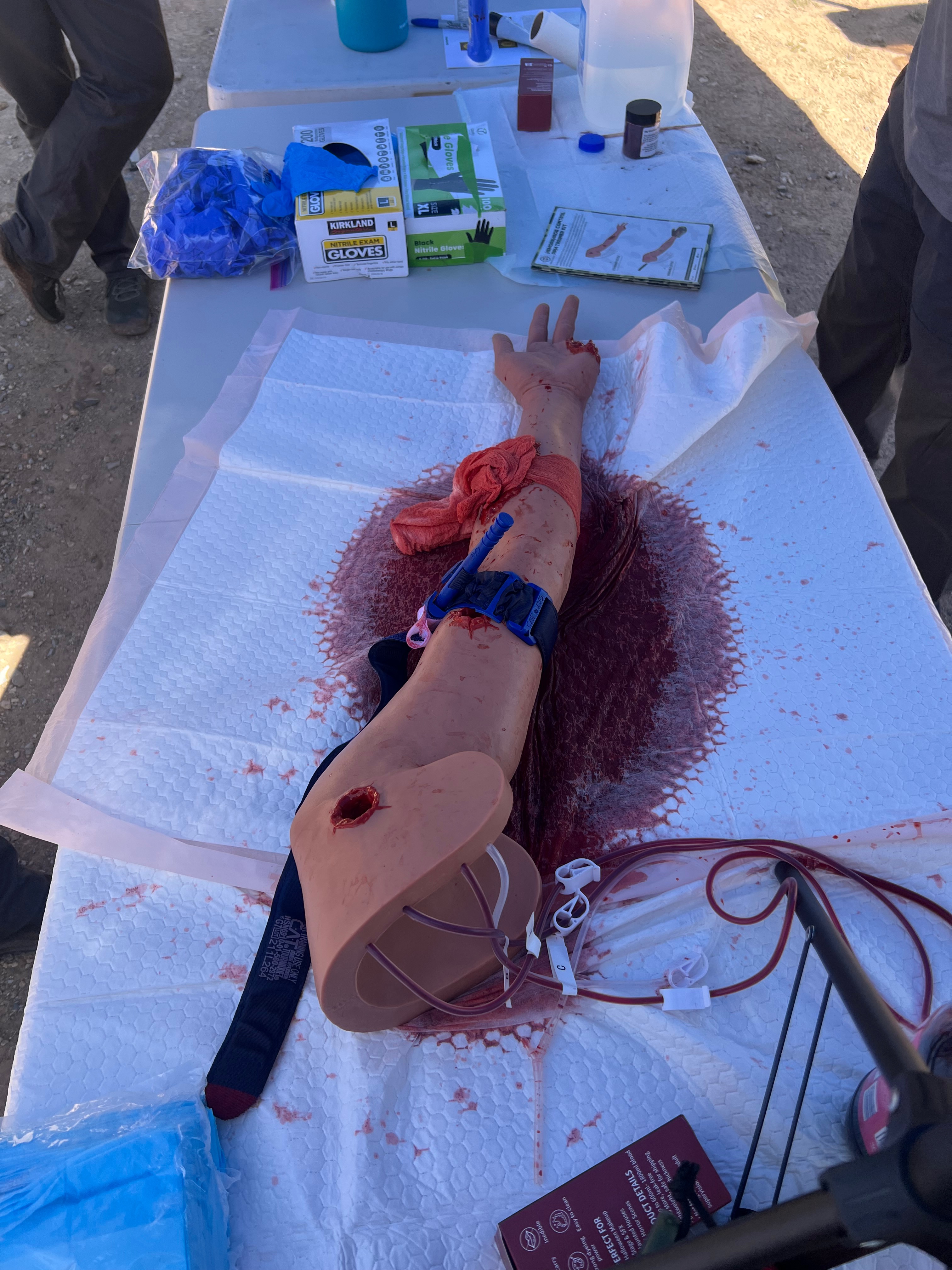
<p>At the medical station, SRA instructors walked attendees through emergency first aid basics. They discussed scene size-up, Individual First Aid Kit (<a href="/medical/safety/2026/04/01/ifak.jekyll.html">IFAK</a>) essentials, and the principles of Stop the Bleed. If the disembodied silicone arm on the table caught your eye, you weren’t the only one. This spooky prop, attached to a bag of fake blood, allowed folks to practice tourniquet application and gauze-stuffing on a simulated injury.</p>

<p><img src="/assets/pictures/firearm_101/2.jpeg" alt="SRA Medical" width="70%" style="display:block; margin:auto;" /></p>

<p><img src="/assets/pictures/firearm_101/3.jpeg" alt="spookly prop" width="70%" style="display:block; margin:auto;" /></p>

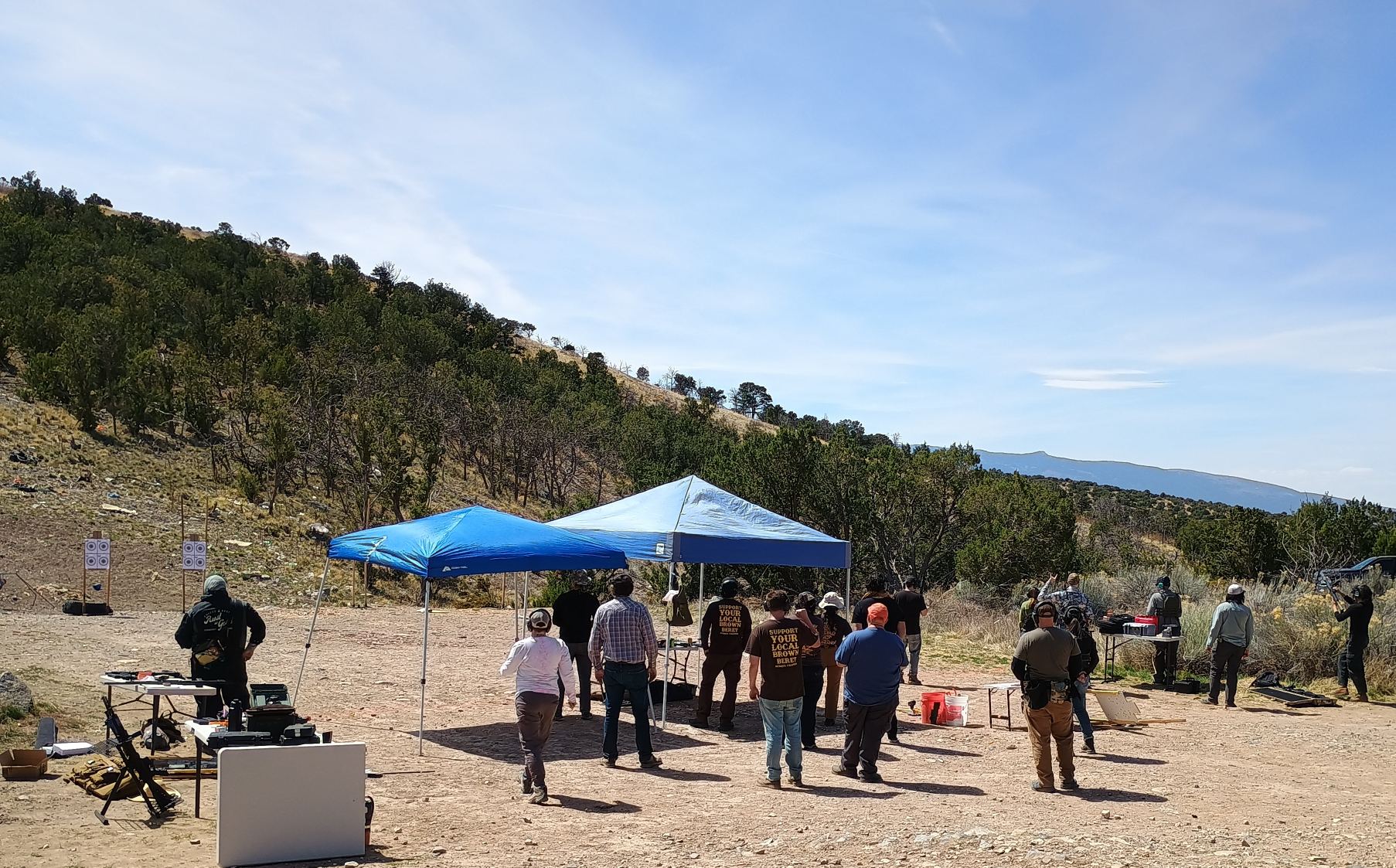
<p>As the training wrapped up, who could resist another hour or so at the range? SRA and BABBNM members took turns skeet shooting, target shooting with revolvers, and exploring all the weird, wonderful guns that crowd the gun safes of your average SRA member.</p>

<p><img src="/assets/pictures/firearm_101/4.jpg" alt="open range" style="display:block; margin:auto;" /></p>

<p>It’s the hope of NMSRA that, by sharing knowledge and providing a safe learning environment, other leftist groups in our community will feel confident in their abilities to own and use firearms. A sincere thanks to the Burque Autonomous Brown Berets of New Mexico for joining us in this inaugural class, looking forward to seeing you all at the range!</p>]]></content><author><name></name></author><category term="BABBNM" /><category term="teaching" /><category term="instruction" /><summary type="html"><![CDATA[Firearms 101: An Inter-Org Day at the Range]]></summary></entry><entry><title type="html">Radio Class</title><link href="https://nm-sra.github.io/radio/mesh/community/2026/03/16/radio-class.jekyll.html" rel="alternate" type="text/html" title="Radio Class" /><published>2026-03-16T17:05:03+00:00</published><updated>2026-03-16T17:05:03+00:00</updated><id>https://nm-sra.github.io/radio/mesh/community/2026/03/16/radio-class.jekyll</id><content type="html" xml:base="https://nm-sra.github.io/radio/mesh/community/2026/03/16/radio-class.jekyll.html"><![CDATA[<h1 id="resilient-comms-for-the-community-amateur-radio">Resilient Comms for the Community: Amateur Radio</h1>

<p>Even in turbulent times like these (to put it mildly), it’s easy to take connectivity and instant communication for granted. But as recent history and current events have repeatedly shown, telecom infrastructure is fragile and easily disrupted by weather events, malicious actors, or even just heavy use—and those are the situations when you need to keep in touch with your communities and loved ones the most.</p>

<p>The NMSRA believes in preparedness, and is fortunate to have several members who are passionate and knowledgeable about radio communications. Last week, those members presented the first in a series of community workshops on HAM, FRS/GMRS, and Mesh radio setups at the International District Public Library in Albuquerque. We were heartened to be joined by an enthusiastic crowd of friends, acquaintances, and new faces, and look forward to continuing these workshops and knowledge-sharing sessions.</p>

<p>Off-grid radio comms, especially when combined with other community resilience measures like solar-powered battery units, can make all the difference when everyday communication networks become unreliable. Any of the three general categories introduced above are capable of providing vital comms functions for small groups or even entire regions, depending on the circumstances, but there are benefits and drawbacks to each.</p>

<h2 id="heres-a-brief-recap-of-what-we-covered-in-our-presentation">Here’s a brief recap of what we covered in our presentation:</h2>

<p>HAM radio may have a (not totally inaccurate) reputation for being a grumpy old man hobby, but it also has a longstanding and widespread network of experienced operators who have repeatedly been an invaluable resource and conduit of information in times of natural disaster, such as <a href="https://www.wired.com/story/hurricane-helene-milton-north-carolina-florida-amateur-radio/">during and after Hurricane Helene in 2024</a>. Unless you live in a very rural area, the infrastructure for HAM is probably already in place, and the useful range can extend for hundreds of miles. Legally, however, HAM radio use is restricted to those who have passed a licensing test and registered a callsign, which requires listing your legal name and mailing address as public information.
More info on HAM here:
<a href="https://www.arrl.org/what-is-ham-radio">what is ham radio?</a></p>

<p>FRS (Family Radio Service) and GMRS (General Mobile Radio Service) are both FM radio bands that generally use line-of-sight, radio-to-radio setups, like walkie talkies. These devices are affordable, portable, and ideal for short-range communication. For longer-range applications, these radios will rely on repeater antennae that, again, likely already exist in most urban areas. FRS radios and frequencies are available to the general public without a license, while GMRS offers some additional functionality like higher wattage transmitting and digital encryption, but requires paid licensure.
More info on FRS, GMRS, and their use cases here: <a href="https://midlandusa.com/blogs/blog/gmrs-or-frs-radio-how-to-choose">FRS vs GMRS</a></p>

<p><a href="/assets/Radio1.pdf">Radio Slides</a></p>

<p>Mesh(core/tastic) is, unlike the government-administrated standards above, an open-source protocol in continuous development. It uses line-of-sight transmissions between all devices in an area to create a mesh network, like a peer-to-peer solution for text communication. Both Meshcore and Meshtastic are based on the <a href="https://lora-alliance.org/">LoRa architecture</a>, and can be installed onto very inexpensive DIY devices. To vastly oversimplify things, Meshcore provides more reliable message delivery, while Meshtastic has a larger userbase and network coverage at present (although the trend seems to be moving toward Meshcore because of the better underlying tech).
Slides from the presentation here: <a href="/assets/meshtastic_meshcore.pdf">Mesh Radio Slides</a></p>

<p><strong>Note</strong>: licensing restrictions for radio use generally don’t apply to emergency situations. Using a HAM radio without a license to call for help when you or someone else’s life is in danger is a completely legal (and intended) use of the system. Regardless, it’s important to be aware of the rules and regulations around radio use so you can avoid unintentionally breaking them.</p>

<p>Ultimately, the particular setup, radio band, or protocol you and your group adopt is less important than having something in place when you need it, and we want to help make sure that happens. The NMSRA is committed to building stronger communities in New Mexico through mutual aid and knowledge sharing, like the in-person radio presentation last week and this companion post. We are proud to be able to use our members’ passions and talents to meet community needs and empower folks to be safe and prepared.</p>

<p>Future public events will focus on acquiring and setting up radio hardware, details of the Meshcore paradigm, and other topics based on attendee interest. More to come, but in the meantime: <em>We keep us safe!</em></p>]]></content><author><name></name></author><category term="radio" /><category term="mesh" /><category term="community" /><summary type="html"><![CDATA[Resilient Comms for the Community: Amateur Radio]]></summary></entry><entry><title type="html">Opinion: NM SB0017</title><link href="https://nm-sra.github.io/nm/legislature/2a/2026/02/16/opinion-nm-sb0017.jekyll.html" rel="alternate" type="text/html" title="Opinion: NM SB0017" /><published>2026-02-16T17:26:10+00:00</published><updated>2026-02-16T17:26:10+00:00</updated><id>https://nm-sra.github.io/nm/legislature/2a/2026/02/16/opinion-nm-sb0017.jekyll</id><content type="html" xml:base="https://nm-sra.github.io/nm/legislature/2a/2026/02/16/opinion-nm-sb0017.jekyll.html"><![CDATA[<p>At the time of this post, the New Mexico state legislature is poised to enact sweeping restrictions on Second Amendment rights with <a href="https://www.nmlegis.gov/Sessions/26%20Regular/bills/senate/SB0017.HTML">SB0017</a>, a bill which would ban the sale of “extremely dangerous weapons” such as any gas-operated firearm, any firearm with a detachable magazine holding more than ten rounds, or indeed even a single .50 caliber cartridge.</p>

<p>In this leftist’s opinion, the so-called “Stop Illegal Gun Trade and Extremely Dangerous Weapons Act” is a textbook piece of performative liberal gun control legislation: <strong>It is misguided, poorly written, likely unconstitutional, and will have little real-world effect beyond harming small businesses and further restricting people’s rights.</strong></p>

<p>Besides the obvious misunderstandings of how firearms actually operate, the fundamental misunderstanding displayed by this bill, as with most gun control legislation in the United States, is of the root causes of gun violence. Gun control bills purport to be a form of harm reduction in order to play on voters’ empathy. The statistical data, however, does not support the approach that SB0017 and other gun control bills take: the vast majority of gun violence is committed with handguns, yet “assault rifles” are the perennial target of these bills. Almost no violent crimes are committed with firearms chambered in .50 BMG, yet “50 caliber” weapons <em>and</em> cartridges are specifically banned in the New Mexico bill. There is also the tragic fact that most gun deaths are self-inflicted, something rarely addressed by legislators.</p>

<p>The reality is that, even aside from the near-certain ineffectiveness of the proposed bans, there are far better and data-supported ways for lawmakers to improve the lives of their constituents. New Mexico is one of the most impoverished states in the country, with some of the highest rates of chronic illnesses like diabetes and obesity. The State could take huge steps towards resolving these issues by funding no-strings housing, enacting single-payer healthcare, instituting universal basic income, or passing dozens of other extremely well-supported reforms, but instead they waste legislative time and taxpayer money on magazine size limits and arbitrary sale restrictions that will, in all likelihood, be overturned in a higher court (after years of legal proceedings and dozens of small business closures).</p>

<p>Those who write and enforce the laws have no mandate to actually solve our problems, or to keep us safe. Capitalism is the problem. <strong>We keep us safe</strong>.</p>]]></content><author><name></name></author><category term="nm" /><category term="legislature" /><category term="2a" /><summary type="html"><![CDATA[At the time of this post, the New Mexico state legislature is poised to enact sweeping restrictions on Second Amendment rights with SB0017, a bill which would ban the sale of “extremely dangerous weapons” such as any gas-operated firearm, any firearm with a detachable magazine holding more than ten rounds, or indeed even a single .50 caliber cartridge.]]></summary></entry></feed>